Learn › Become a NY Home Inspector › Week 4
Week 4 · Module 1: Structure, exterior & roofSpecialtyTermites and other wood-destroying insects
AI-narrated. A recording by Onelfri is coming soon.
I've found termite damage in NYC-area homes, like the Valley Stream house in these photos. Under NY law a home inspection doesn't include an inspection for pests, and wood-destroying insect (WDI) inspections are a separate service. But when you see damage or evidence during a home inspection, you still report the damage, and you need to know what you're looking at.
What the law says, and where to look
NY Real Property Law § 444-b(4) says a home inspection shall not include an inspection for radon or pests, and the SOP says you aren't required to determine the presence of wood-destroying organisms (§ 197-5.16(k)). You still report deteriorated or damaged framing (§ 197-5.5). So: report the damage you see, say what it's consistent with, and refer to a licensed pest professional.
Where I look first:
- Sill plates and rim joists, especially behind front and rear stoops and next to attached garages, where wood sits close to soil or fill.
- Basement window frames and the corners of sliding doors.
- Crawlspaces, which are a favorite spot for termites.
- Wood touching soil anywhere: posts, steps, trim, form boards left in place.
- Ends of wood. Contractors often cut out the damaged part and leave the rest, so a fresh cut end or a short new piece can tell a story.
Subterranean termite signs
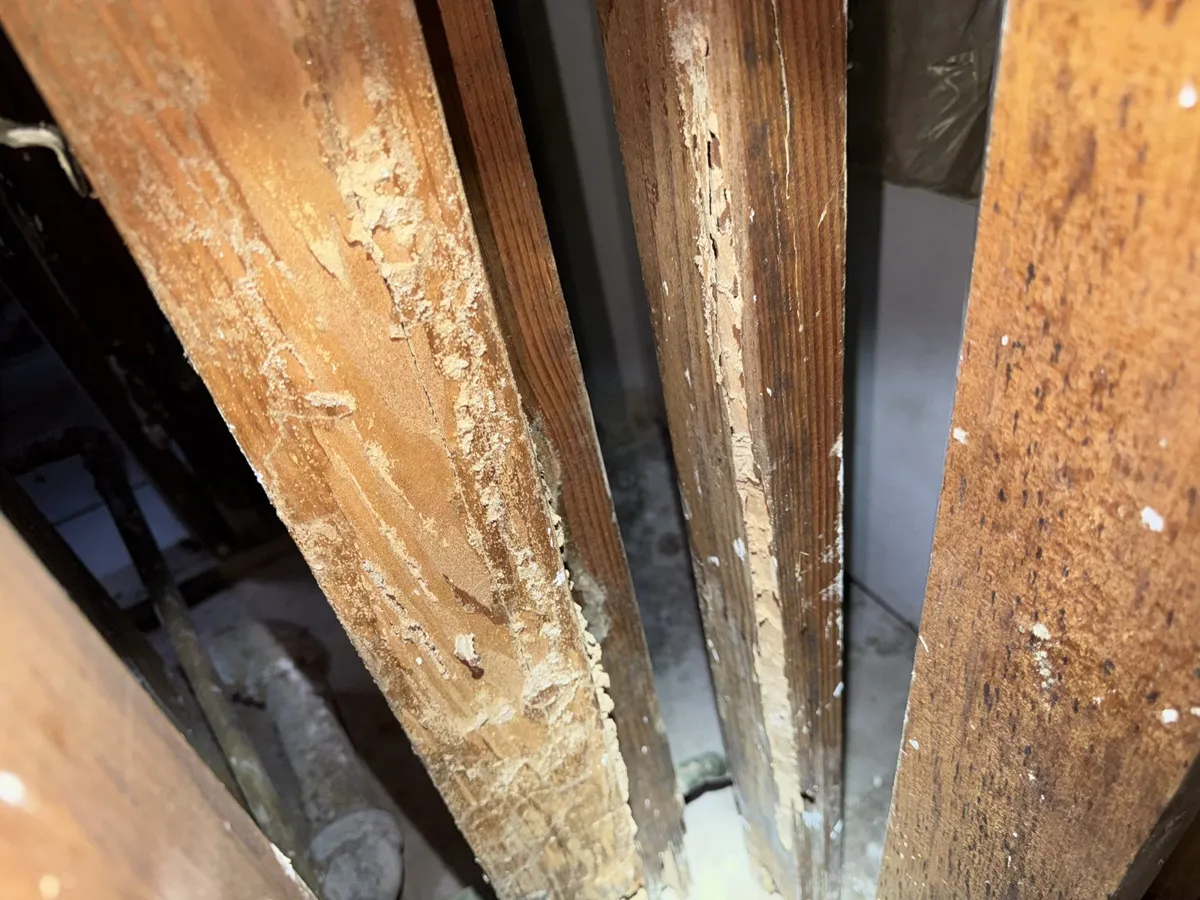
Subterranean termites live in the soil and need moisture, so the workers build mud tubes (narrow tunnels of soil) up foundation walls, piers and pipes to reach the wood. Other signs:
- Wood hollowed out along the grain, with the harder grain left behind and soil packed into the galleries. Show your client the dirt and the slivered wood.
- Discarded wings on windowsills or floors, often with no bodies. That pattern usually points to a swarm.
- Soft, damaged wood when you probe it.
Checking a mud tube, and the words to use
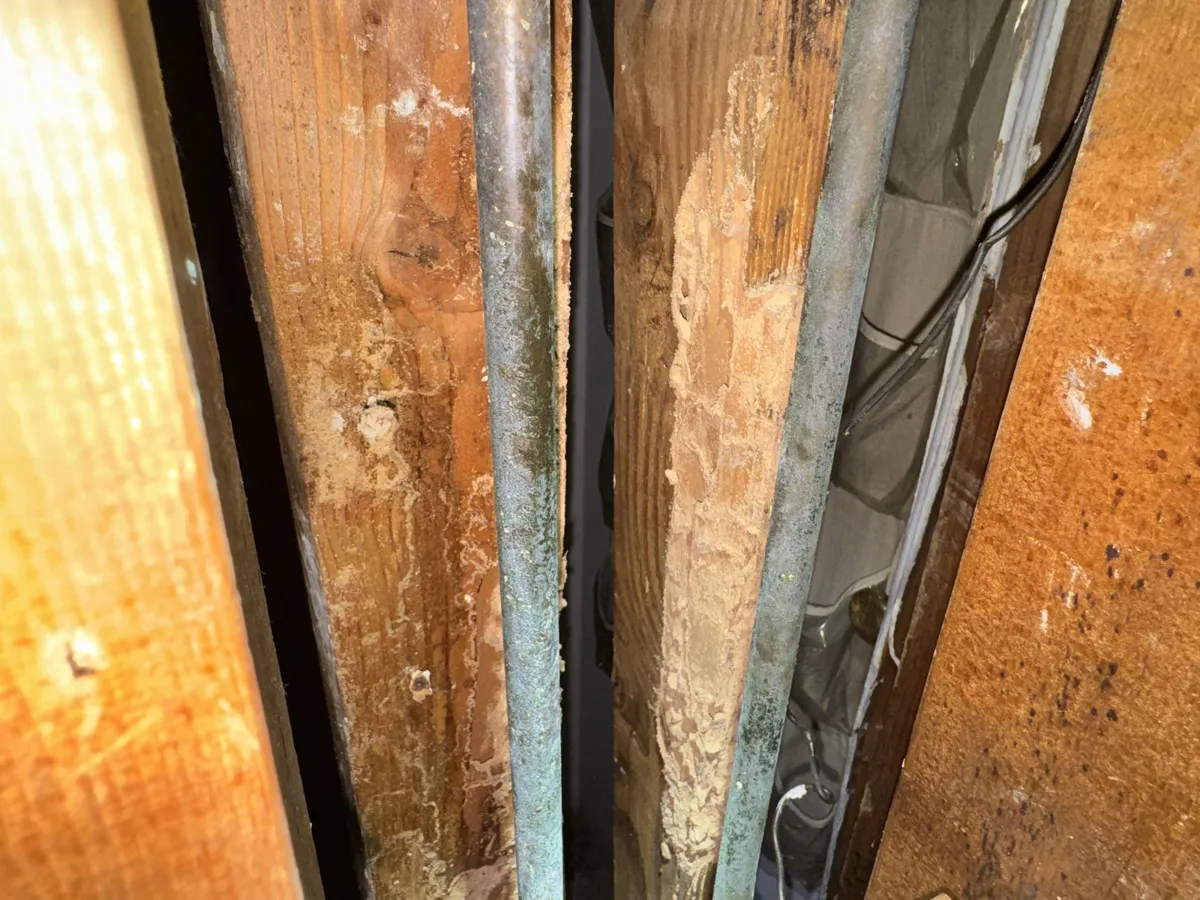
Don't break open mud tubes without your client there. When you do check one, scrape it from the top down, quickly, and look inside right away. Live termites inside are evidence of activity. An empty, dry tube may be old, but termites can rebuild or be active somewhere else, so it isn't proof they're gone.
Be careful with words. Write "signs of active termites" only when you actually see live insects. Otherwise: "Wood-destroying insect damage consistent with subterranean termites was observed. Activity could not be determined." Never say a house is termite-free.
Other wood-destroying insects, and prevention
- Carpenter ants don't eat wood; they hollow it out to nest. Look for frass: small piles of wood shavings mixed with insect parts. When you find frass, look up to find where they're digging. Tree branches touching the house give them a bridge.
- Powderpost beetles leave small round exit holes and fine powder, often in older wood floors and framing.
- Telling ants from termites: ants have a pinched waist and bent antennae; termites have a thick waist and straight antennae.
Prevention you can report on: no wood-to-soil contact, firewood and mulch kept away from the walls, moisture problems fixed, and gaps around the foundation sealed. In some older homes you'll see copper termite shields, metal strips between the foundation and the sill meant to force termites into the open where you can see their tubes. Note them, and check the wood above them anyway.
Describe this defect
Write it up the way it would go in a report: what it is, where it is, why it matters, and what you'd recommend. It stays in this browser; nothing is sent anywhere.
Model write-up
URGENT. Wood-destroying insect damage consistent with subterranean termites was observed at the wall studs beside the vertical piping in the area shown: wood slivered along the grain with soil on the face of the studs. No live insects were observed, so activity could not be determined. Damage may extend into concealed areas. Recommend evaluation and treatment as needed by a licensed pest professional, and evaluation and repair of damaged framing by a qualified contractor.
Self-check: did your write-up…
Check yourself: 5 questions
Pick an answer to see instantly whether it's right. Your answers are saved in this browser.
Key takeaways
- NY law: a home inspection doesn't include pests, and WDI inspections are separate; still report damage you see.
- Look at sills near stoops and garages, basement windows, crawlspaces, ends of wood and anywhere wood touches soil.
- Mud tubes, hollowed wood with soil packed in, and discarded wings point to subterranean termites.
- Only write 'signs of active termites' when you see live insects; scrape tubes top-down with the client present.
- Carpenter ants leave frass; powderpost beetles leave pinholes and powder; no wood-to-soil contact.
Finished the lesson? Mark it complete to save your progress in this browser.