Learn › Become a NY Home Inspector › Week 4
Week 4 · Module 1: Structure, exterior & roofWater at the foundation: efflorescence and dampness
AI-narrated. A recording by Onelfri is coming soon.
Most basement water comes from the outside surface, not from some underground river. Rain and snowmelt that land next to the house, plus gutters and leaders that dump right at the wall, soak the soil against the foundation and push through. Keep that in mind before you blame the water table or a pipe.
Reading the clues on the wall
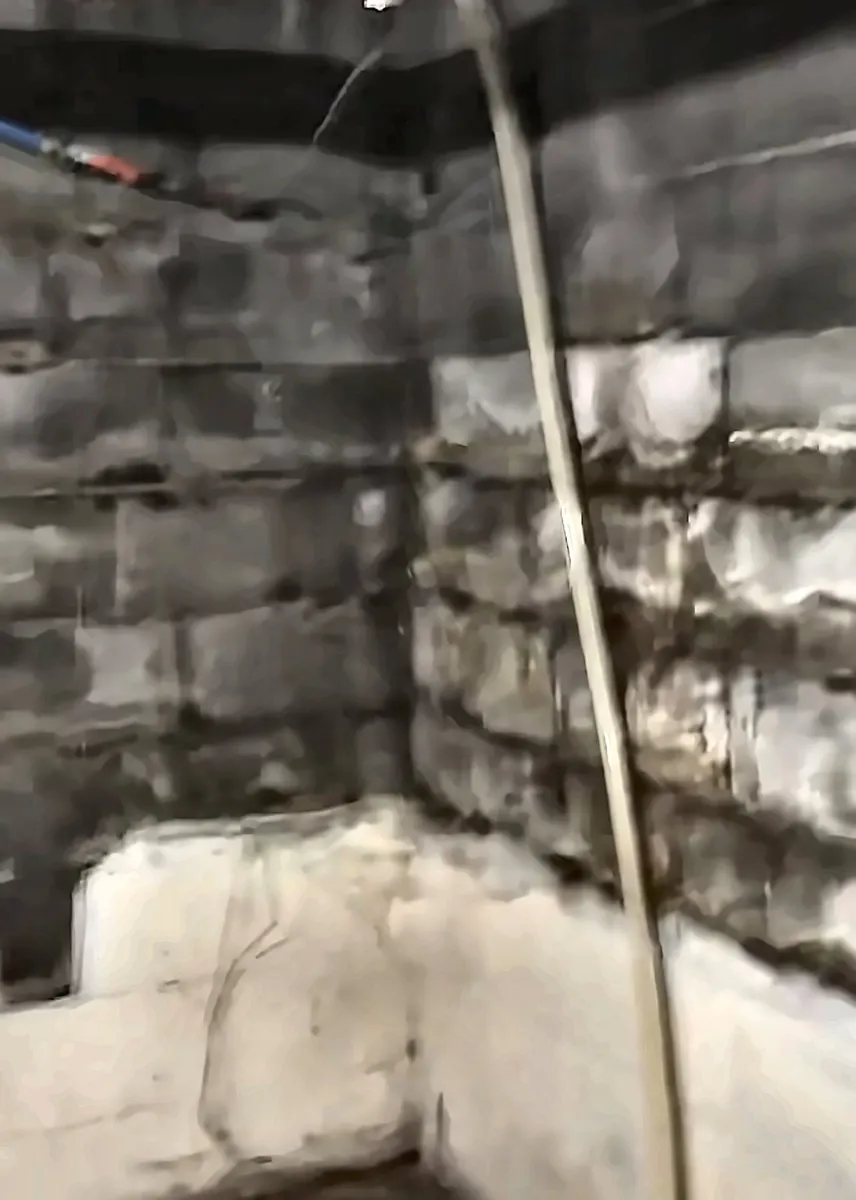
Water leaves evidence even when the basement is dry the day you're there:
- Efflorescence. White, powdery or crusty salt deposits. Water carried salts through the masonry and evaporated. It isn't damage by itself, but it tells you water has been moving through that wall.
- Tide lines and stains on walls, the bottom of stairs, boxes or the boiler or furnace base.
- Rust on the bottoms of metal posts, appliance legs and the bottom of the water heater.
- Musty smell, peeling paint, crumbling mortar low on the wall.
Use your moisture meter to check whether an area is damp right now, and say in the report whether it was wet or dry when you saw it.
Where water gets in
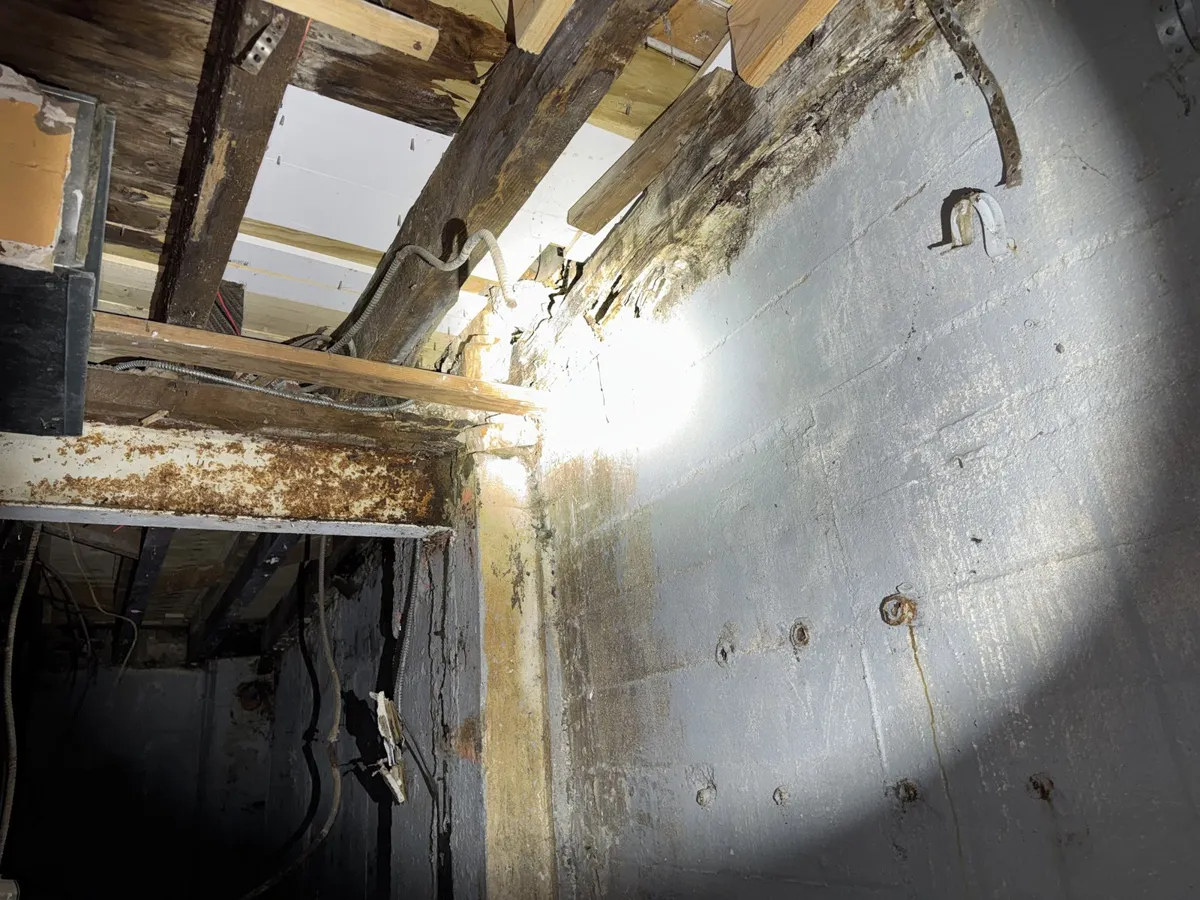
Common paths: where the floor meets the wall, at the top of the wall where the framing sits, through cracks and tie holes, around pipe penetrations, at window wells, and under exterior doors at the bottom of areaway steps. When you find water inside, walk the same wall outside. Soil sloping toward the house, a leader discharging at the foundation, an overflowing gutter or a clogged areaway drain is often the answer.
Don't promise a source you can't confirm. "Possible sources include..." is honest. "This is from the water table" usually isn't something you can know in a visual inspection.
Dampproofing, waterproofing, drains and sumps
Dampproofing is a coating on the outside of the foundation that slows moisture through the wall. Waterproofing is a heavier system meant to resist water under pressure. You usually can't see either once the soil is backfilled, so don't say which one is there unless you can actually see it.
French drains (interior perimeter drains) collect water at the base of the wall and carry it to a sump pit. Sump pumps push that water out. Under § 197-5.8 you report on drainage sumps, sump pumps, ejector pumps and related piping. How I test one: if the pit is accessible and it's safe, I lift the float with a wooden stick (not my hand) to see if the pump starts, or I pour water into the pit or the drain channel. Then I look at where the discharge goes. A pump that sends water right back at the foundation is just cycling the same water.
What not to miss and how to write it
- Plastic sheeting stapled under the floor joists in a basement or crawlspace can trap moisture against the wood. Look for staining or rot above it where you can.
- Fresh paint or new drywall low on a wall in an otherwise old basement can hide past water. Note it neutrally.
- Dehumidifiers, fans and wet-vacs sitting out are clues too.
- Flood vents in flood-prone homes should be open, not blocked or covered.
Write it the same way every time: what you saw, where, whether it was wet or dry when you saw it, why it matters, and who should look next. Usually that's improving exterior drainage first, then a waterproofing contractor if water continues.
Describe this defect
Write it up the way it would go in a report: what it is, where it is, why it matters, and what you'd recommend. It stays in this browser; nothing is sent anywhere.
Model write-up
PLAN FOR. Efflorescence (white mineral deposits) was observed on the concrete block foundation wall in the area shown, indicating that moisture has moved through the wall over time. Efflorescence is not structural damage by itself, but ongoing moisture can deteriorate mortar and contribute to dampness and musty conditions. Possible sources include surface water at the exterior, grading, and gutter or leader discharge. Recommend checking the area with a moisture meter, improving exterior drainage first and monitoring; if moisture continues, have a qualified waterproofing contractor evaluate.
Self-check: did your write-up…
Check yourself: 5 questions
Pick an answer to see instantly whether it's right. Your answers are saved in this browser.
Key takeaways
- Most basement water comes from surface water next to the house.
- Efflorescence, tide lines and rust at the bottom of posts are evidence of past water, even on a dry day.
- Check the same wall outside for grading, gutters, leaders and areaway drains.
- Don't claim dampproofing vs waterproofing or a single source you can't see.
- Test the sump pump if accessible and safe, and check where it discharges.
Finished the lesson? Mark it complete to save your progress in this browser.