Learn › Become a NY Home Inspector › Week 10
Week 10 · Module 3: Heating, cooling, plumbing & fireplacesOld cast iron vs modern no-hub drain pipe
AI-narrated. A recording by Onelfri is coming soon.
When I walk into the basement of an older house in Queens, the Bronx or Yonkers, one of the first things I look for is the main drain stack. It's the big vertical pipe that carries everything from the toilets, tubs and sinks down and out to the sewer. In a lot of NYC-area homes it's still the original cast iron. Some of that pipe is still doing its job. Some of it is quietly failing. On an inspection your job is to identify what you're looking at, describe the condition you can actually see, and point the client to the right next step.
Two pipes that look alike from across the room
Old and modern drain pipe are both cast iron, both heavy, and both usually painted black or rust-brown. The difference is how the pieces are joined.
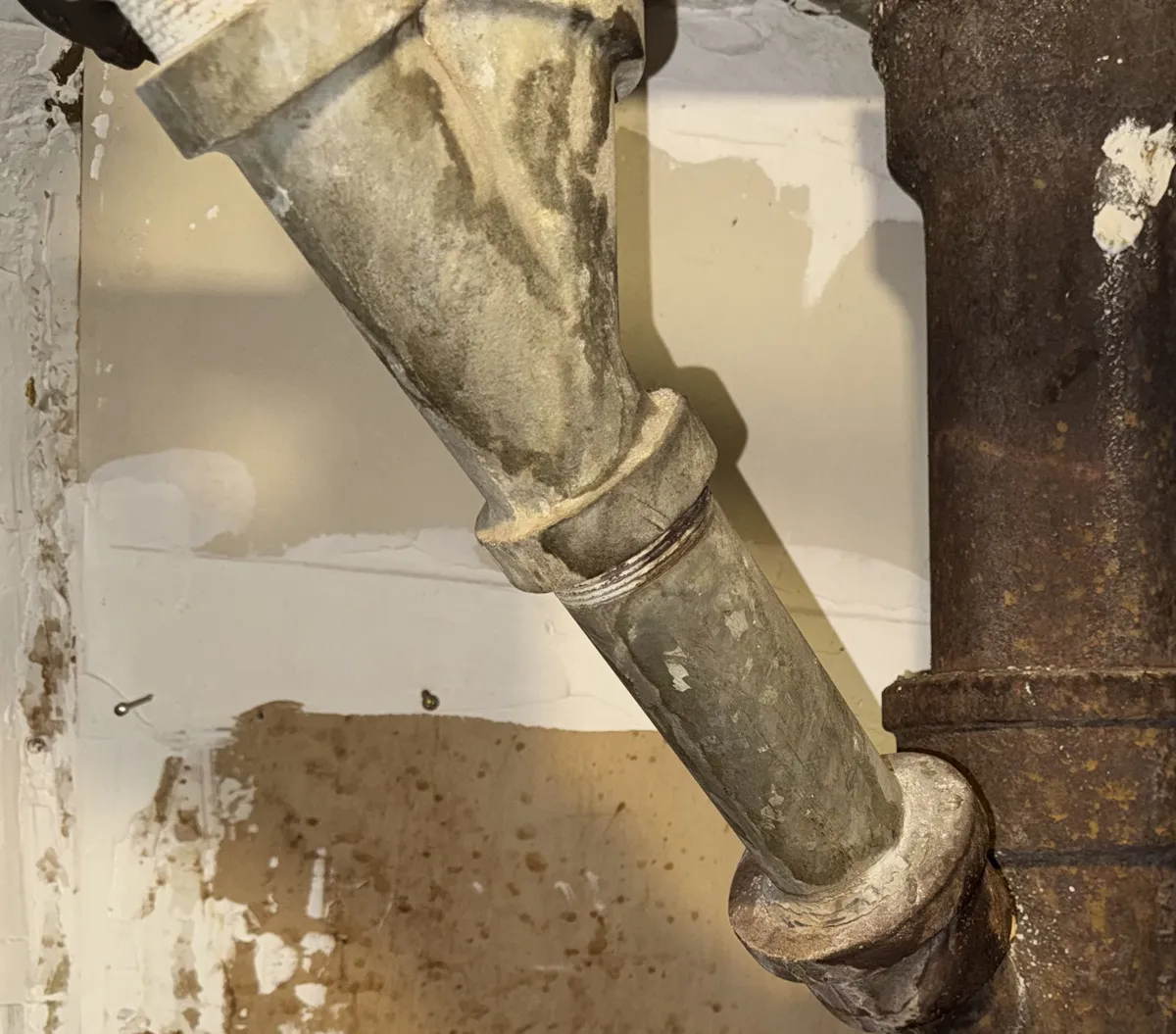
Old hub-and-spigot cast iron
One end of each length flares out into a wider bell, called the hub. The plain end of the next pipe, the spigot, sits inside it. Plumbers packed the gap with oakum (oiled rope fiber) and sealed it with poured lead. From the outside you see a fat collar every few feet along the stack. In older homes it's often paired with threaded galvanized steel branch lines.
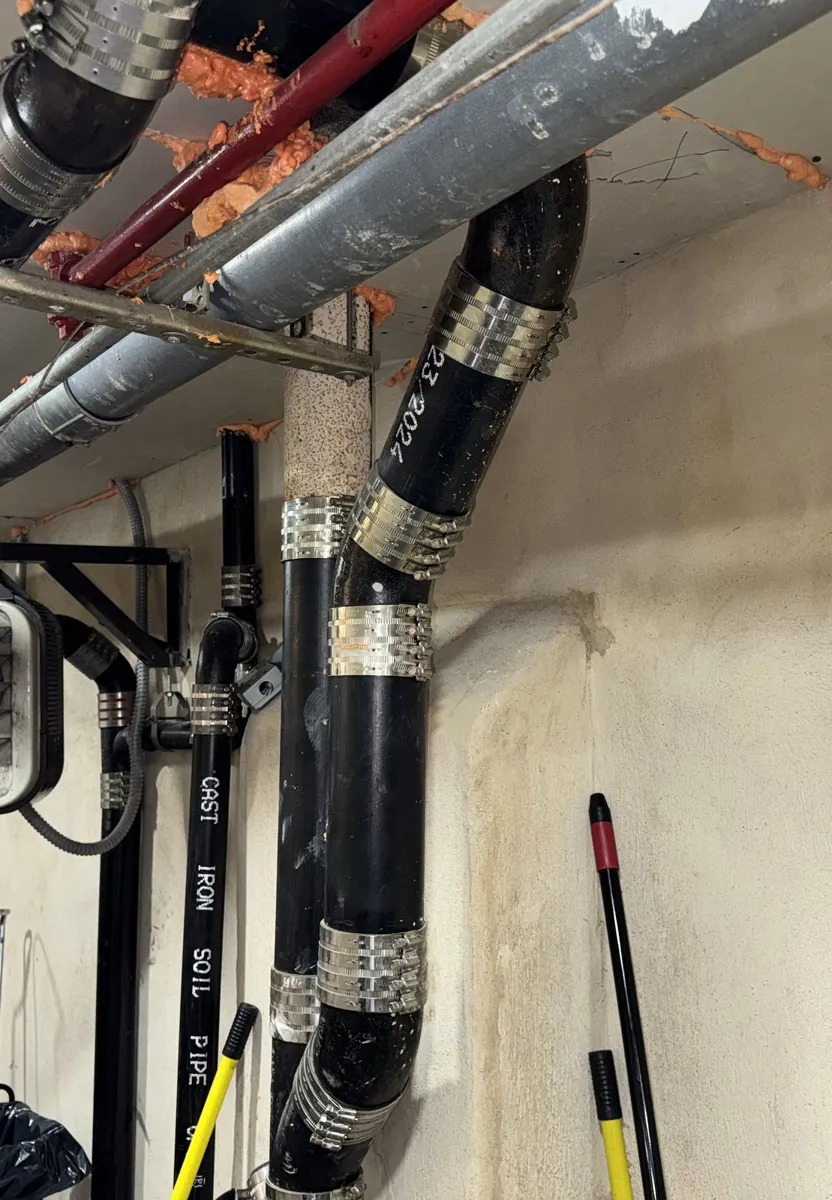
Modern no-hub cast iron
The pipe ends are straight. They're joined by a no-hub coupling: a rubber (neoprene) sleeve wrapped in a stainless steel band, tightened with screw clamps. You'll see shiny bands at each joint instead of bulging hubs. You'll also see it where someone replaced a bad section of an old stack, so look for the spot where old meets new.
What failure looks like
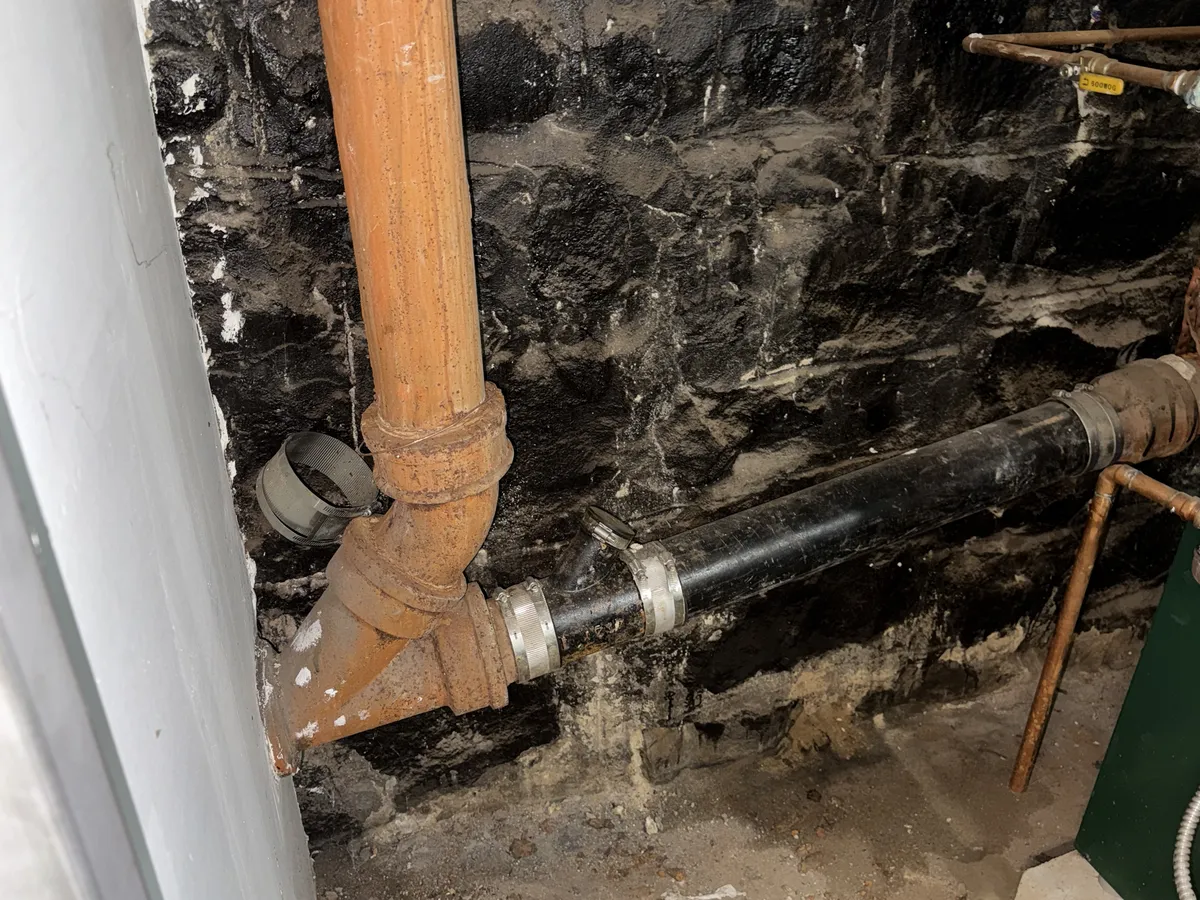
Cast iron usually corrodes from the inside out, so by the time you see trouble on the outside it's been going on a while. Here's what I look for:
- Rust scaling and flaking, especially heavy layers that come off when touched lightly.
- Weeping joints: rust-colored streaks, crusty deposits or damp spots at the hubs.
- Cracks along the bottom of horizontal runs, where waste sits and wears the pipe thin.
- Stains or wet spots on the floor or wall under the pipe.
- Sewer odor in the basement.
- Repair clamps, patches or mismatched sections, which tell you someone already had a problem here.
- Poor support: missing hangers, or a horizontal run that sags.
Know the limits of what you can see
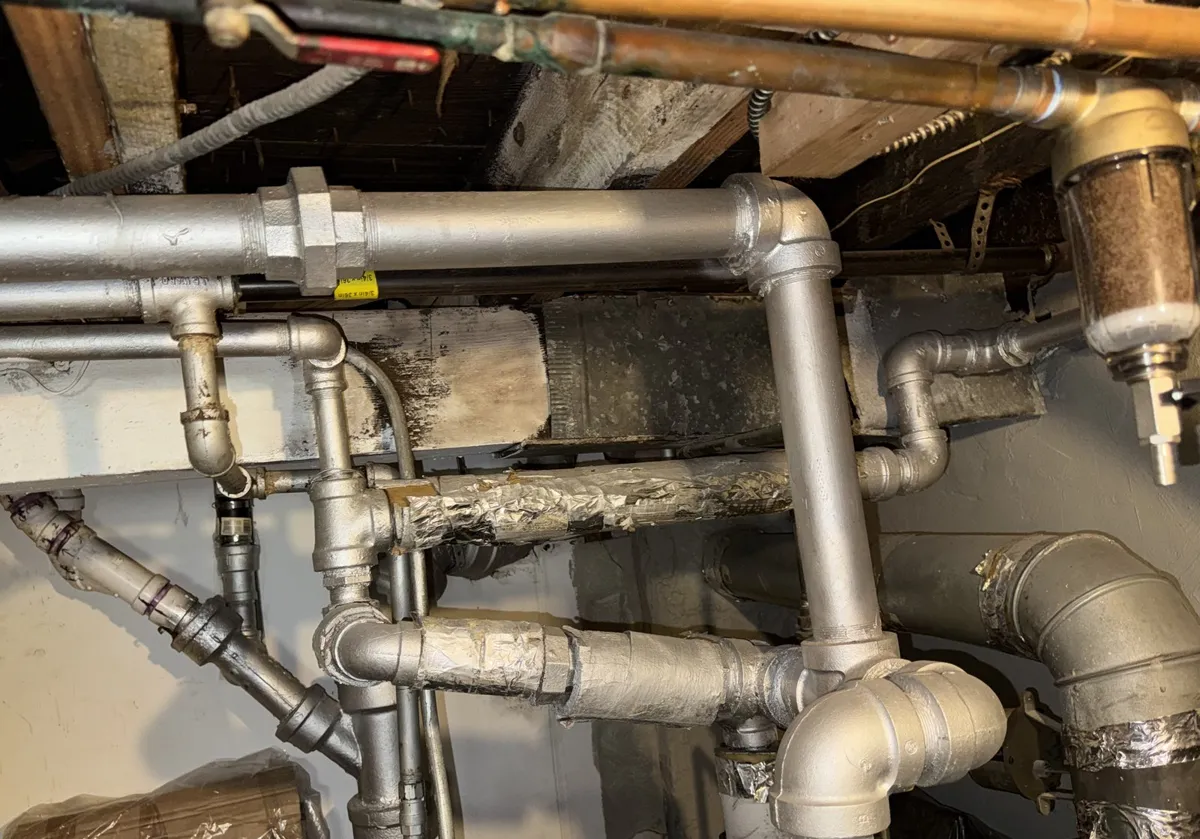
A home inspection is visual. You can't see the inside of a pipe, and a stack that looks fine on the outside can be thin inside. Most of the drain line is also hidden in walls, under the slab, or underground out to the street. So I run water at several fixtures, watch for slow drains and leaks at the visible joints, and when the pipe is old or shows any of the signs above, I recommend a camera inspection by a licensed plumber. That's honest, and it protects you and your client.
What to write in the report
Describe what you saw, why it matters, and what the client should do next. For example:
PLAN FOR: The main drain stack in the basement is older hub-and-spigot cast iron with rust scaling and staining at two joints. Corroded cast iron can leak or crack, and the inside of the pipe can't be seen during a visual inspection. Recommend evaluation by a licensed plumber, including a camera inspection of the drain line, before you sign the contract.
Modern no-hub pipe in good shape can simply be identified: "Drain piping at the basement is cast iron with no-hub couplings. No leaks observed at the time of inspection."
Study tip for the exam
Be able to define these terms in your own words: hub, spigot, oakum, no-hub coupling, drain-waste-vent (DWV) system, cleanout and trap. Then practice describing a photo out loud: material, joint type, condition, recommendation.
Describe this defect
Write it up the way it would go in a report: what it is, where it is, why it matters, and what you'd recommend. It stays in this browser; nothing is sent anywhere.
Model write-up
PLAN FOR. The main drain stack along the left basement wall is older hub-and-spigot cast iron with heavy rust scaling at the hub joints and a threaded galvanized steel branch line tied into it. Corrosion on cast iron usually starts inside the pipe, and the interior can't be seen during a visual inspection, so leaks or cracks may develop. No active leaks were observed at the time of inspection. Recommend a licensed plumber evaluate the drain piping, including a camera inspection, before you sign the contract.
Self-check: did your write-up…
Check yourself: 5 questions
Pick an answer to see instantly whether it's right. Your answers are saved in this browser.
Key takeaways
- Old cast iron has bulging hub-and-spigot joints sealed with oakum and lead; modern no-hub uses rubber sleeves inside stainless steel bands.
- Corrosion usually starts inside the pipe. Outside signs are rust scaling, weeping joints, cracks on the bottom of horizontal runs, stains and odor.
- You can't see inside the pipe. When it's old or showing signs, recommend a licensed plumber with a camera.
- Write it as observation, why it matters, next step.
Finished the lesson? Mark it complete to save your progress in this browser.