Learn › Become a NY Home Inspector › Week 2
Week 2 · Module 1: Structure, exterior & roofFlashing, gutters and roof drainage
AI-narrated. A recording by Onelfri is coming soon.
Most roof leaks don't start in the middle of the roof. They start where the roof meets something else: a wall, a chimney, a vent pipe, a skylight, an edge. And a lot of basement water starts on the roof too, when gutters and leaders dump it right next to the foundation. The NY Standards of Practice include flashing and roof drainage systems in the roof section, and they define roof drainage systems as gutters, downspouts, leaders, splash blocks and similar parts that carry water off a roof and away from a building. That definition is the whole lesson in one sentence.
Flashing: where roofs usually leak
Flashing is metal or membrane material that seals the joints where the roof covering meets something else. You'll see:
- Step flashing along a sidewall or chimney on a sloped roof, woven in with the shingles.
- Counterflashing set into the masonry of a chimney or parapet and lapped over the base flashing, so water can't get behind it.
- Pipe boots or vent flashing around plumbing vents.
- Drip edge along the eaves and rakes.
- Base flashing on flat roofs, where the membrane turns up the parapet wall.
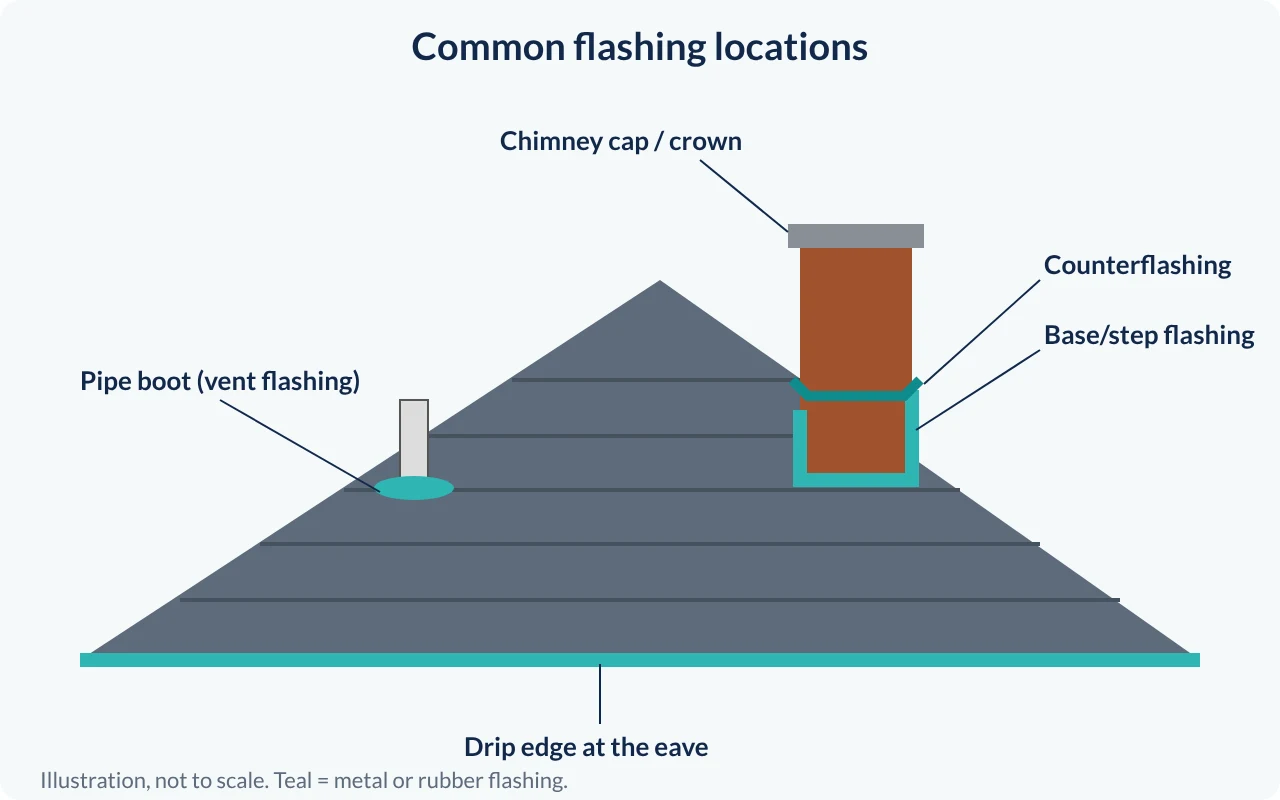
What to look for: rusted, loose or missing flashing; counterflashing pulled out of the mortar joint; cracked pipe boots; flashing smeared over with roof cement or tar instead of being properly installed (often a sign of a past leak); and stains on the ceiling or in the attic below any of these spots. Follow up from the attic when you can.
Parapets, coping and flat-roof drainage
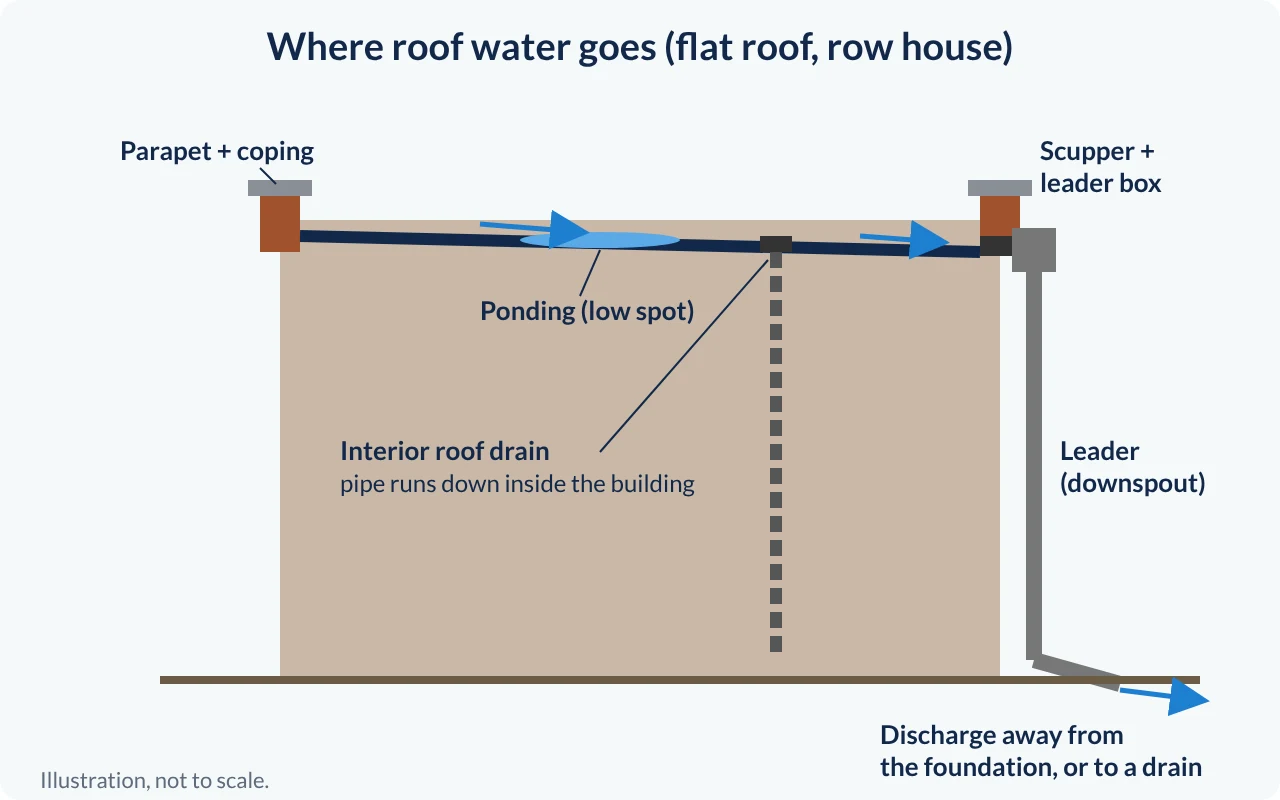
On NYC row houses and buildings, the parapet and its coping take a beating from weather on both sides. Look at the coping for open joints, cracks, loose or missing pieces, and at the parapet for cracked or missing mortar and leaning. Water that gets into a parapet can show up as damage on the wall below or inside the top floor.
Flat roofs drain in a few ways:
- Interior roof drains: a drain in the roof surface with a strainer, piped down inside the building. Look for a missing or clogged strainer, debris and ponding around the drain.
- Scuppers: openings through the parapet that let water out to a leader box and a leader down the outside wall. Look for blockage and for gaps or rust where the scupper goes through the wall.
- Gutters along an edge with no parapet.
Gutters, leaders and where the water ends up
On houses, gutters catch water at the eaves and send it to leaders, which many people call downspouts. Check them from the ground and the ladder where it's safe:
- Gutters clogged with debris or granules, sagging or pulling away, or leaking at seams.
- Gutters that slope the wrong way and hold water.
- Leaders that are disconnected, crushed, missing or loose.
- Where each leader discharges. Follow it to the bottom. Does it go into an underground pipe, onto a splash block or extension that carries water away, or straight onto the ground next to the foundation?
Water dumped at the foundation is one of the most common reasons for damp basements. When a leader discharges right at the wall, report it and recommend extending it so water is carried away from the house. When a leader goes into an underground pipe, you can't see where that pipe goes or whether it's blocked, so say that.
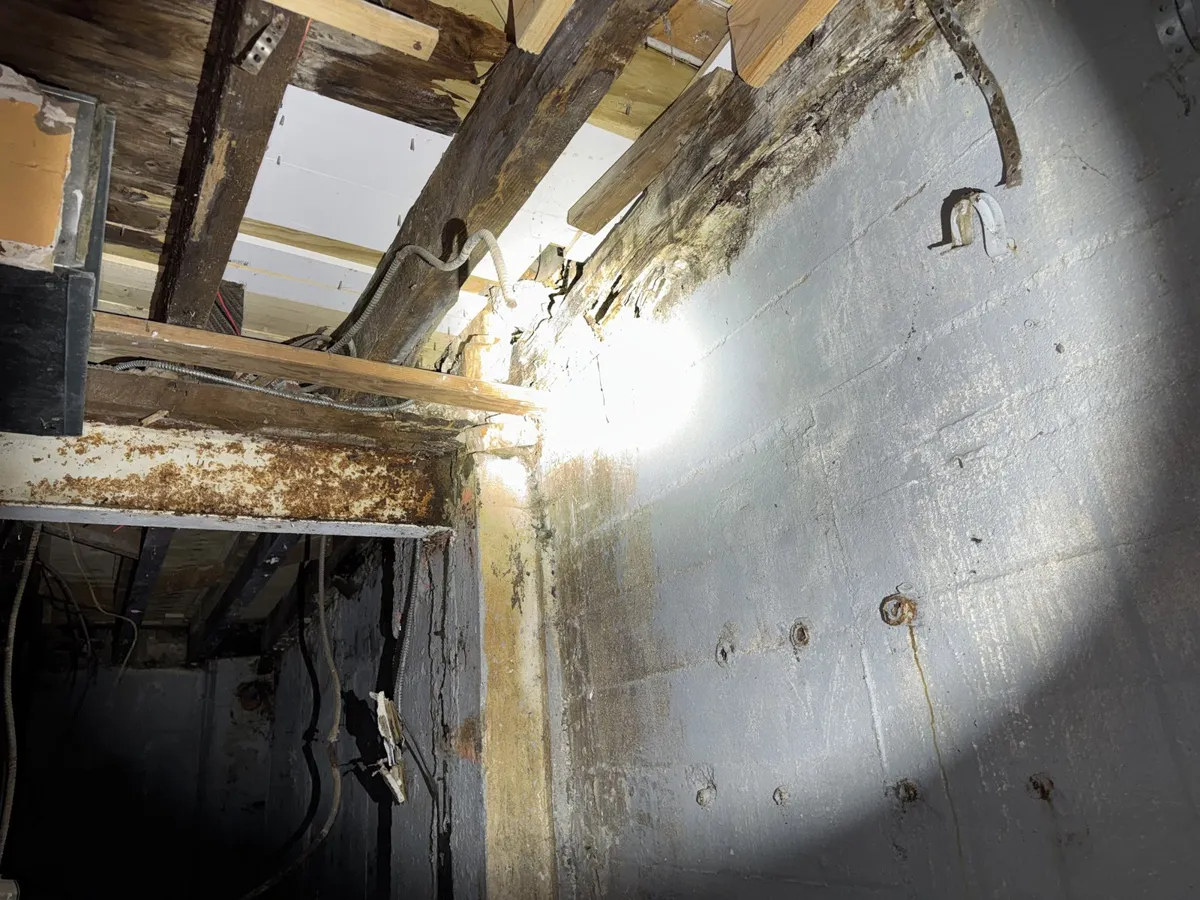
Inside, connect the dots. Stains below a chimney, a skylight or an exterior wall under a leader tell you where to look outside. In your report, describe what you saw in each place, but don't claim a cause you can't confirm.
Describe this defect
Write it up the way it would go in a report: what it is, where it is, why it matters, and what you'd recommend. It stays in this browser; nothing is sent anywhere.
Model write-up
EVALUATE. Rotted wood at the sill and joist ends was observed at the top of the basement foundation wall, with water staining down the wall below, and rust was present on the adjacent steel beam. The source of the water could not be determined during the inspection; roof drainage, gutters and leaders, flashing, and the exterior wall above are possible sources. Continued water entry can lead to further wood decay and damage to the structure. Recommend a qualified contractor find and correct the water source, and evaluation of the damaged wood by a qualified contractor or structural engineer.
Self-check: did your write-up…
Check yourself: 5 questions
Pick an answer to see instantly whether it's right. Your answers are saved in this browser.
Key takeaways
- Most roof leaks start at flashing: chimneys, walls, vents, skylights and edges.
- Look for loose or rusted flashing, counterflashing pulled out of mortar, cracked pipe boots and heavy tar patching.
- On flat roofs, check parapets and coping, interior drains with strainers, and scuppers with leader boxes.
- Follow every leader to where it discharges. Water at the foundation is a common cause of damp basements.
- Connect interior stains to exterior conditions, but don't claim a cause you can't confirm.
Finished the lesson? Mark it complete to save your progress in this browser.