Learn › Become a NY Home Inspector › Week 1
Week 1 · OrientationHow to use this track (and your tools)
AI-narrated. A recording by Onelfri is coming soon.
Most people who study for this license have a job, a family and a commute. That's fine. This track is built so you can move through it in short pieces, week by week, and always know where you left off. In this lesson I'll show you how the track is organized, a weekly routine that works, the tools and safety gear you'll see on real inspections, and how your progress is saved. At the end you'll set up your own study calendar.
How this track is built
The top level follows the four 25-hour modules in the DOS course syllabus (19 NYCRR § 197-2.3, in the DOS law and regulations PDF): structural, exterior and roof; interior, insulation and ventilation, and electrical; heating, cooling and plumbing; and an overview of the profession, NYS license law and report writing. I added fireplaces and chimneys to Module 3. In the syllabus, the 40 field hours are a separate fifth module. Around the four modules you have an orientation week, a field practice week and a final exam-prep week, about 14 weeks in all.
Inside each module, lessons go in the order a real inspection usually goes: outside and on top first, then down into the basement, then through the house and its systems. That way you're building the same habit you'll use in the field.
Every full lesson works the same way:
- Short screens with real photos from NYC-area homes, or labeled illustrations when I don't have a photo yet.
- Audio in English and Spanish, so you can listen on the train.
- A writing exercise where you describe a defect the way it would go in a report.
- A 5-question quiz with instant feedback.
Lessons tagged NY-specific cover things national courses don't, like steam heat and co-op building filings. There's also a practice question bank with 10-question module tests, and a glossary that pairs everyday words with the terms you'll see on the exam.
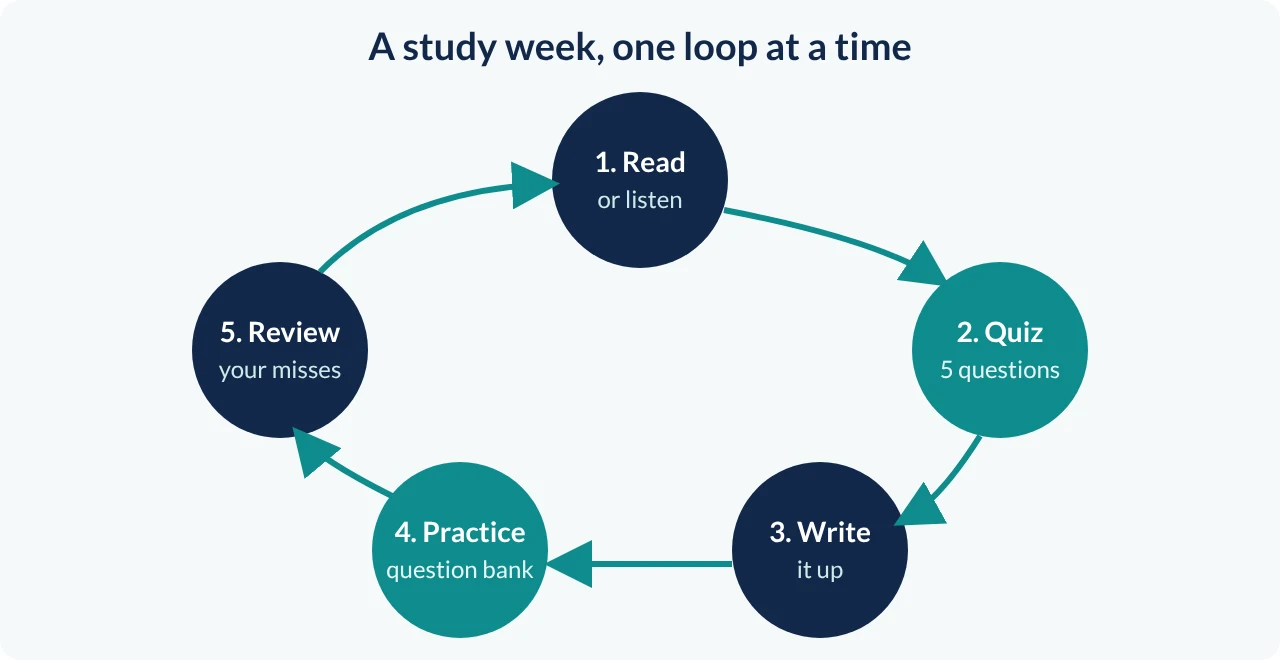
A weekly routine that works
Here's what I'd do with a normal week:
- Two short sessions to read or listen to that week's lessons. Most weeks have two to four.
- One writing session. Take three photos from the lessons, or from your own house, and write each one up: what it is, where it is, why it matters and what you'd recommend. Writing is the skill that separates a good inspector from someone who just points at things.
- One practice session in the question bank, filtered to that week's module.
- Five minutes of review on anything you missed, before you move on.
Keep a notebook, paper or on your phone, with three columns: the everyday word, the inspector term, and a sketch or a note about where you'd find it. The exam is in English, so if Spanish is your first language, write both. If you fall behind a week, don't double up. Just slide your calendar. Steady beats cramming.
If you're in an approved course, use this track to prepare for the field hours. Read the lesson for that system before you go out, and ask your supervisor about anything that didn't make sense. Ride-alongs and practice inspections, even on your own home or a friend's, are where the reading turns into skill.
Tools: what's in the bag
You don't need to buy anything to start studying. But you'll see these on every real inspection, so learn what they're for:
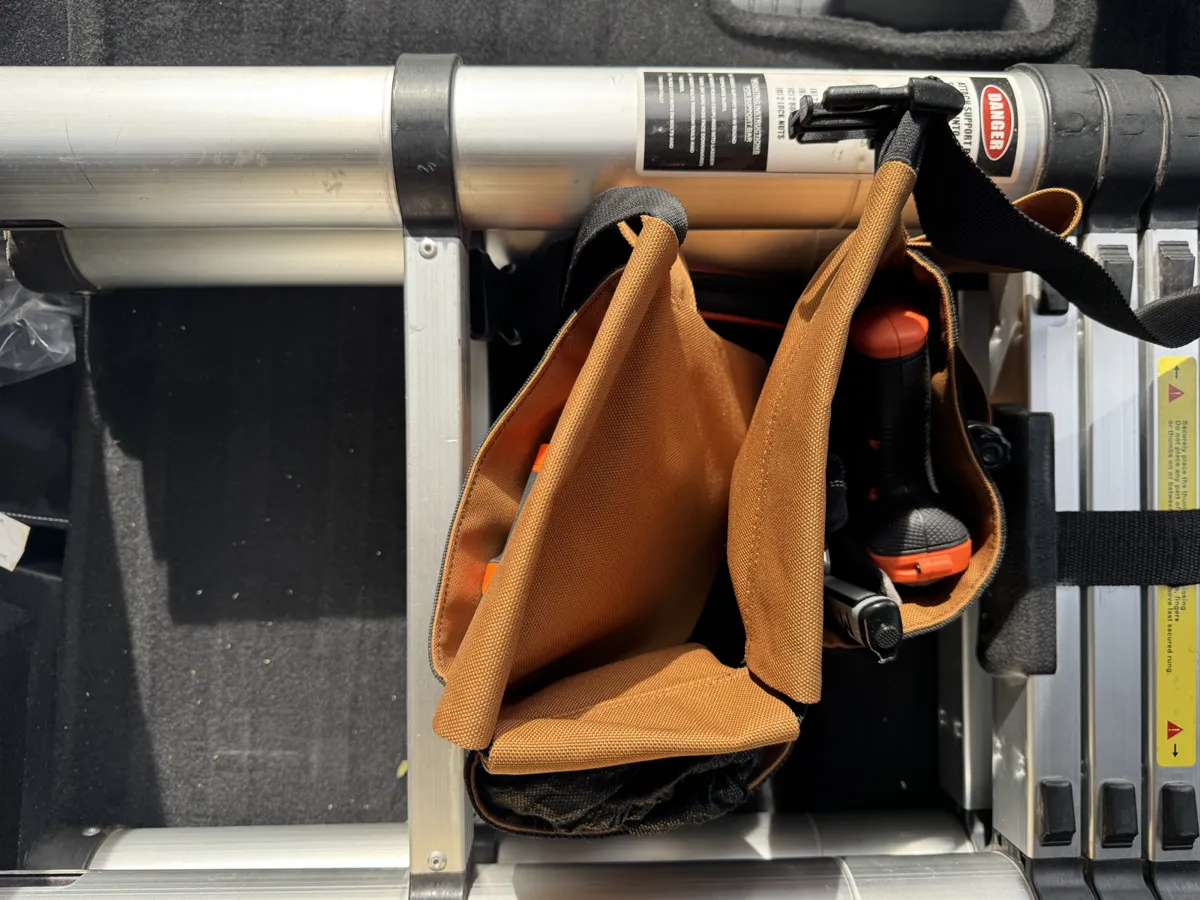
What I actually carry: inspection tools
As an Amazon Associate I earn from qualifying purchases.
- Klein RT250KIT NCV and GFCI tester
Outlet wiring and GFCI checks, plus a non-contact voltage check.
View on Amazon - Klein ET140 pinless moisture meter
Checks stains and suspect spots without poking holes.
View on Amazon - KIZEN LP300 infrared thermometer
Surface temperatures at radiators, vents and supply lines.
View on Amazon - DJI Mini 4K drone
For roofs I can't reach safely. Follow FAA rules and NYC's drone restrictions, and check before every flight.
View on Amazon
Roof camera pole setup
I use this to photograph roofs from the ground or a ladder when walking the roof isn't safe.
Safety gear
What I actually wear on inspections, plus a few items I recommend for everyone.
As an Amazon Associate I earn from qualifying purchases.
Also recommended
Field tips
- Carry a second outlet tester. They fail, and a bad reading should be double-checked.
- A telescoping inspection mirror helps you see behind and under things you can't reach.
- A combustible gas detector checks for gas leaks at fittings. It's a different tool from a carbon monoxide detector.
- Use a wooden stick, not your hand, to lift a sump pump float.
- Photograph the panel before you take the cover off.
- Set the ladder on firm footing and secure it. OSHA's construction rule calls for a ladder used to reach a roof to extend at least 3 feet above the edge (29 CFR 1926.1053(b)(1)).
Safety first, always. A home inspection is visual. Don't step where you aren't sure the framing will hold you, and don't touch wiring. Electrical panels show how the NY Standards of Practice handle risk. The SOP has you check the main and branch circuit conductors "by visual observation after removal of the readily accessible main and sub electric panel covers" (19 NYCRR § 197-5.9(a)(3)). It also says you're not required to "insert any tool, probe or testing device into the main or subpanels" (§ 197-5.9(c)(5)). "Readily accessible" doesn't include any action "which will likely involve risk to persons or property" (§ 197-5.1(u)), and you're not required to enter any area that, in your opinion, is dangerous (§ 197-5.16(g)).
So if the panel cover is readily accessible and it's safe, take it off with caution: check the enclosure with a non-contact voltage tester first, wear proper PPE such as safety glasses and insulated gloves, and keep your hands and tools out of the panel. If it isn't safe, leave the cover on and write down that the panel interior wasn't inspected and why. Learn this hands-on with your supervisor before you ever do it alone.
How your progress is saved
There's no account and no login. When you mark a lesson complete, answer quiz questions or write in an exercise box, it's saved in this browser on this device. If you clear your browser data or switch to another phone or computer, it won't follow you. If you want reminders, you can leave your email in the optional box, but you don't need it to use anything here.
Use Continue where you left off on the track page to jump to your next lesson. If you ever want to start over, the reset button is at the bottom of every page.
Plan your study weeks
Pick a start date and the day you'll study. The calendar below fills in the 14 weeks and saves only in this browser. Check off each week as you finish it.
Check yourself: 5 questions
Pick an answer to see instantly whether it's right. Your answers are saved in this browser.
Key takeaways
- The track follows the four DOS modules, and inside each one the lessons go in the order of a real inspection.
- A good week is two reading sessions, one writing session, one practice session and a quick review.
- Writing defects clearly is the core skill, so practice it every week.
- Learn the tools and put safety first. The NY SOP has you look inside readily accessible panels, but never at the cost of an unsafe action. If it isn't safe, write down what wasn't inspected and why.
- Progress saves only in this browser. No account is needed.
Finished the lesson? Mark it complete to save your progress in this browser.