Learn › Become a NY Home Inspector › Week 3
Week 3 · Module 1: Structure, exterior & roofNY-specificOlder NYC housing stock: pre-war and row houses
AI-narrated. A recording by Onelfri is coming soon.
A lot of the homes you'll inspect in the city were built long before anyone alive today, and they've been renovated over and over since. That's what makes NYC inspections interesting: one house can have original brick walls, framing from one era, wiring from three more, and a kitchen from last year. This lesson is a map of what to expect in older NYC housing, so that when you walk into a pre-war row house you know where to look and what you can and can't say.
Pre-war row houses and party walls
"Pre-war" is the word you'll hear for buildings from before World War II. Many older NYC row houses share party walls with the houses next door: solid masonry walls that carry the floors of both houses. The wood floor joists often rest in pockets in that masonry.
What that means for you:
- You can only see your side of the party wall. Note cracks, bulges, water staining and open masonry where you can see it, especially in the basement and at the roof.
- Water, pests and smoke don't respect property lines. Staining on a party wall can come from the neighbor's roof or plumbing, so say the source couldn't be determined.
- Joist ends sitting in damp masonry can decay. Look closely where joists meet the walls in the basement, and recommend evaluation if you see rot, sagging or past repairs like sistered joists.
- Roofs, parapets and sometimes chimneys are shared or connected with the neighbors. Repairs on one side can affect the other.
Balloon framing in older wood houses
In many older wood-frame houses in the outer boroughs, Long Island and the counties north of the city, you'll find balloon framing, where the wall studs run continuously from the foundation up past the floors. Newer houses use platform framing, where each floor is built as a platform and the walls of the next floor sit on top.
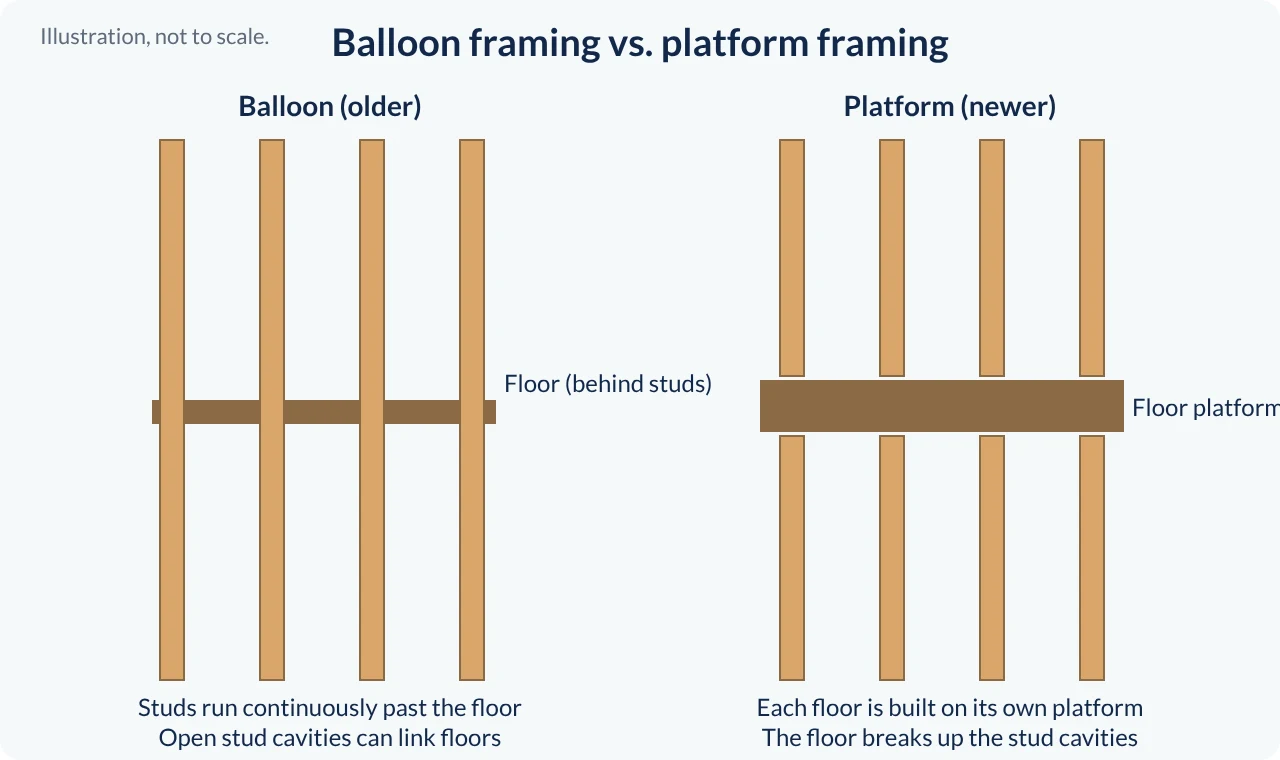
Why it matters: open stud cavities can let air, and in a fire, flames move between floors unless they've been blocked. You usually can't see this from inside finished walls. When you can see it from the basement or attic, note it and recommend evaluation of fire blocking by a qualified contractor.
A preview of the generations
Older houses collect systems from different eras. We'll cover each in later modules; for now, learn to recognize them:
- Wiring: knob-and-tube in the oldest homes, then older cable types, then modern cable. Often several in one house.
- Water piping: galvanized steel, then copper, then plastic types like PEX.
- Drains: old hub-and-spigot cast iron, then no-hub cast iron and plastic.
- Heat: steam and hot-water radiators, oil tanks, later gas.
Lead paint and suspected asbestos
Lead paint. The EPA says that if your home was built before 1978, it's more likely to have lead-based paint, and that in 1978 the federal government banned the sale of lead-based paint for use in homes (EPA: Sources of Lead). Paint in good condition is usually not a problem; peeling, chipping and dust from deteriorated paint or renovation are. The EPA also points owners to lead-safe certified contractors for renovation in pre-1978 homes. On an inspection, note peeling or chipping paint, give the year built if you know it, and recommend lead testing when it's relevant to the client.
Asbestos. Older homes can have materials like pipe and boiler insulation, some floor tiles, siding shingles and other products that may contain asbestos. The EPA says you generally can't tell whether a material contains asbestos just by looking at it, that undamaged material is usually best left alone, and that a trained and accredited professional should take any samples (EPA: Protect Your Family from Exposures to Asbestos).
How to say it: never write "asbestos" as a fact. Write "suspected asbestos-containing material" and recommend testing by an accredited professional before it's disturbed. The NY SOP says inspectors aren't required to determine the presence of hazardous substances such as asbestos or lead paint (19 NYCRR § 197-5.16(c)), so describe what you saw and let the right professional confirm it.
Describe this defect
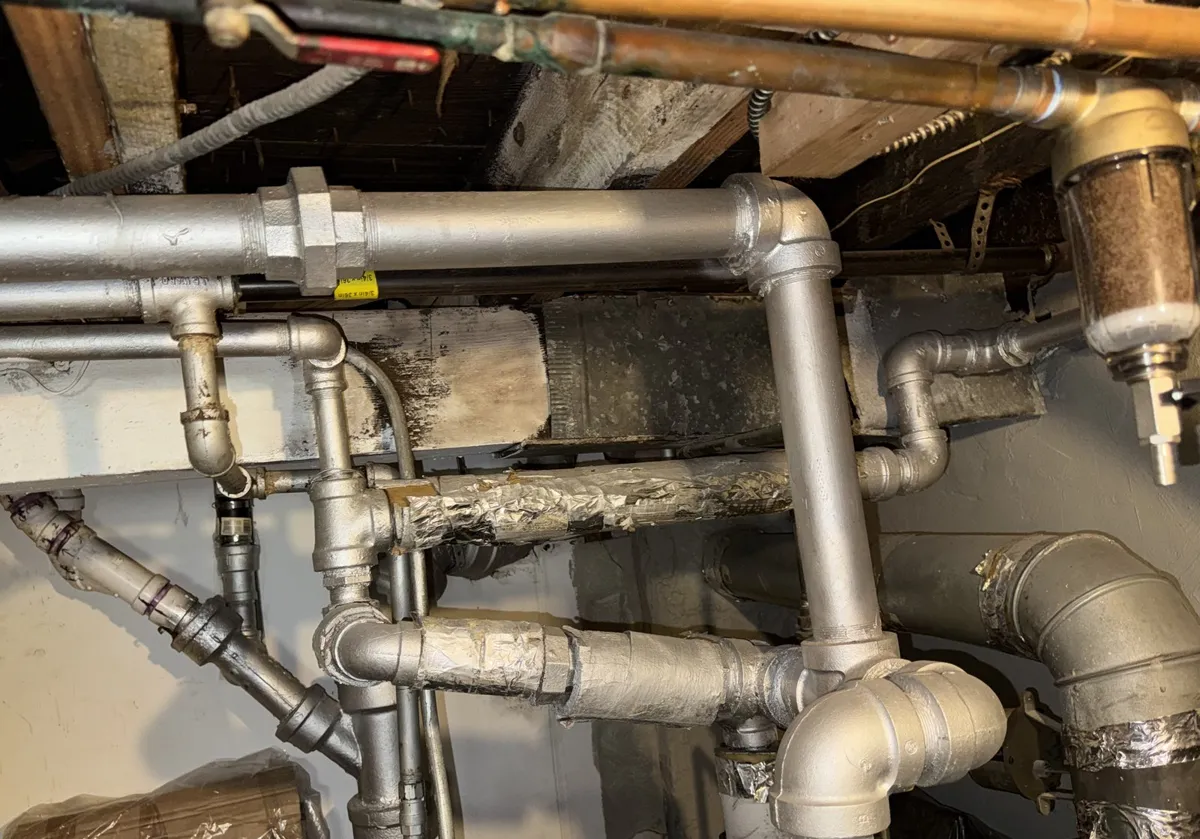
Write it up the way it would go in a report: what it is, where it is, why it matters, and what you'd recommend. It stays in this browser; nothing is sent anywhere.
Model write-up
EVALUATE. Galvanized steel water piping was observed at the basement ceiling, along with newer copper piping, indicating partial past replacement. Some piping is wrapped in foil tape, and what is under the wrap could not be seen. Older galvanized piping can corrode on the inside, which can reduce water flow and lead to leaks. Recommend a licensed plumber evaluate the remaining galvanized piping. If the wrapping covers older pipe insulation, treat it as suspected asbestos-containing material and have it tested by an accredited professional before it is disturbed.
Self-check: did your write-up…
Check yourself: 5 questions
Pick an answer to see instantly whether it's right. Your answers are saved in this browser.
Key takeaways
- Many older NYC row houses share solid masonry party walls; you can only see your side, so note what's visible and what isn't.
- Check where joists sit in masonry for decay, sagging and past repairs.
- Balloon framing has continuous stud cavities; recommend evaluating fire blocking where you can see it.
- Expect several generations of wiring, piping, drains and heat in one house.
- Pre-1978 homes are more likely to have lead paint (EPA). Call materials 'suspected asbestos' and recommend testing before disturbing.
Finished the lesson? Mark it complete to save your progress in this browser.